These are the ten books I would recommend for a bookshelf. Bear in mind that this is my choice and that it isn’t to everybody’s taste. I would welcome any suggestions as there is always something new to learn regarding our magnificent obsession.
So here they are in no particular order.
Editing is an arse on WordPress. I want my text aligned left and the bugger centers it!

FAQ 2 by Mig Jemenez.
It was a toss up between this or the excellent Tank Art by Michael Rinaldi. This won by a gnats as it covers so many techniques. Military modelling is leading miniature figure painting and these techniques can feed into miniatures.
As an aside, I am really surprised there is no brass etch after market for GW/Forgeworld vehicles. I suppose I could just look out for 1:48th scale accessories.
You are going to see these techniques more and more often so it doesn’t hurt to be ahead of the curve. Don’t be surprised if GW bring out some form of chipping medium in the near future.
In the also rans is Forgeworld’s Model Masterclass Volume Two
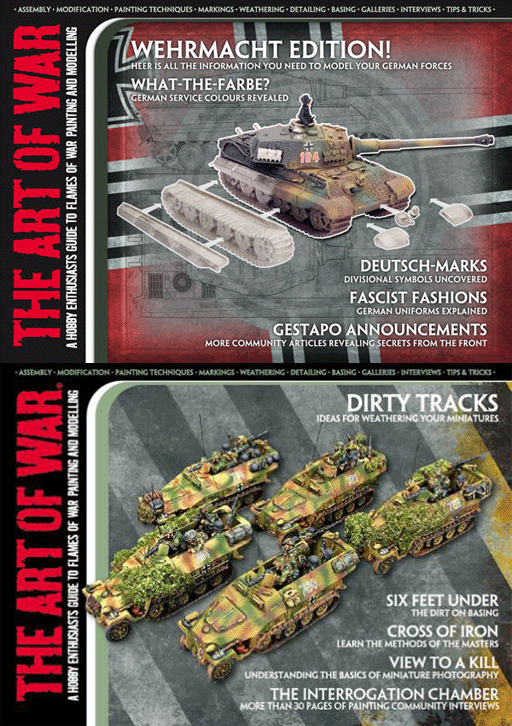
Art of War published by Battlefront.
This is a bit of a cheat as it is two magazines. Sadly Battlefront haven’t followed up on these. This has proved to be inspirational showing it is possible to paint 15mm figures to the standard of 28s rather than the blobs of paint that I see so often.
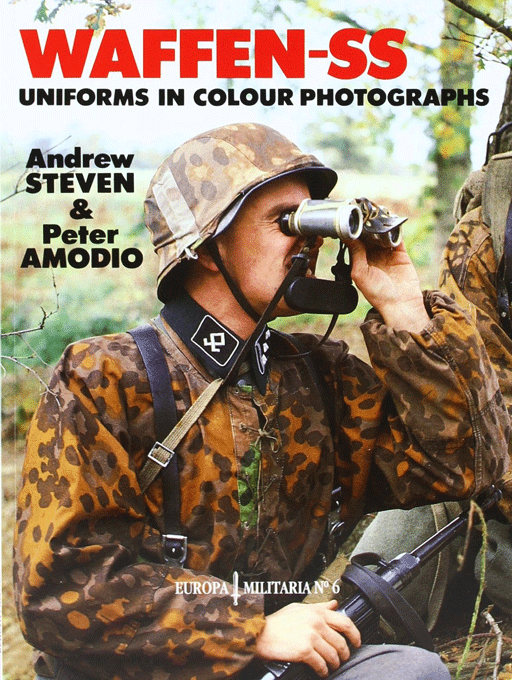

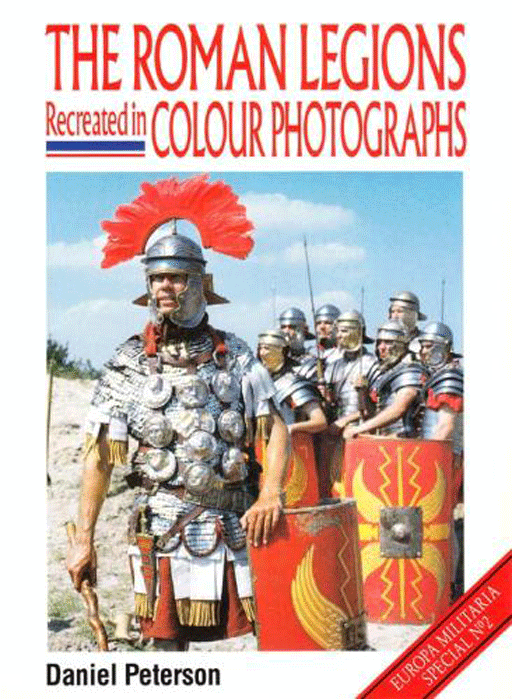
These are great for seeing the uniforms of the armies I am painting “in the flesh”.

British Napoleonic Uniforms by C.E. Franklin.
A bit dry but a useful reference. The only things missing were Aide des Camp (?) and artillery which is covered in another volume.
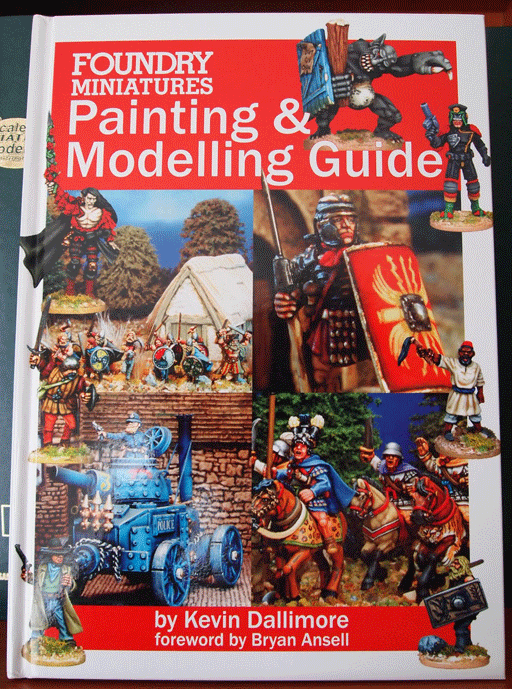
Foundry Miniatures Painting and Modelling Guide by Kevin Dallimore.
The three colour paint style popularised by Kevin and supported by Foundry’s paint system is a bit cartoony, but when you apply the “Three foot rule” (ie you look at the figures on the tabletop, not in your hand) it works very well. I want to perfect this technique. My figures look quite good close up, OK not competition standard, but tend to be indistinct at a distance. I have a friend whose armies (he has quite a few) really Pop on the tabletop but are a little disappointing close up. My aim is for Pop and Wow.
This book is full of examples and step by step guides. Starting with One Colour models, tournament basic standard, then Two Colour and finally Three Colour painting. Helpfully the guides use the same model so you can compare and contrast.
If I had to pick one book from this list of ten, it would be this one. The techniques can be applied can be applied to any manufacturers paint system. Or a mix’n’match as I do.

Warhammer Fantasy Battle Rules Third Edition and Warhammer Armies. A bit of a cheat again again having a two in one. There is a joy in these rules. A game can be fun. I do miss the humour of the Fluff from the eighties. This is what got me into gaming when I was reading my friends White Dwarfs. I think I’ll stick to these rules rather than spend another fifty odd quid on yet another humourless set of rules and army book. Rumoured for later this year.
There is a growing community of gamers going back to Third Edition rules with a friendly forum to exchange ideas.
Oldhammer
http://forum.oldhammer.org.uk
Saying that I’ll probably get some of the new Orc figures when they come out. It would be nice to see some new Orcs, Goblins, Wolfriders and Chariots.

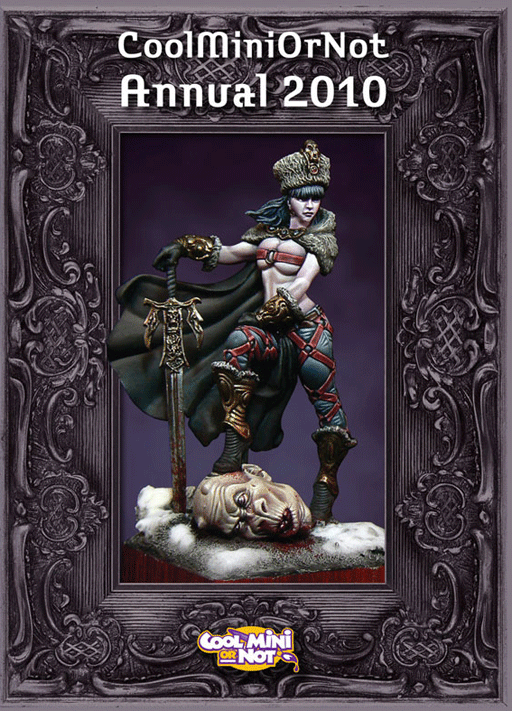
Cool Mini Or Not Annual. Sometimes the photography is a bit iffy. But it is so inspirational to see figures from manufacturers you’ve never heard of painted to really high standards. I’ve bought figures on the basis of what I’ve seen. Reaper I name and shame you!
I haven’t yet dared to enter any figures on the site, but nothing ventured etc. I’ll post when I have.
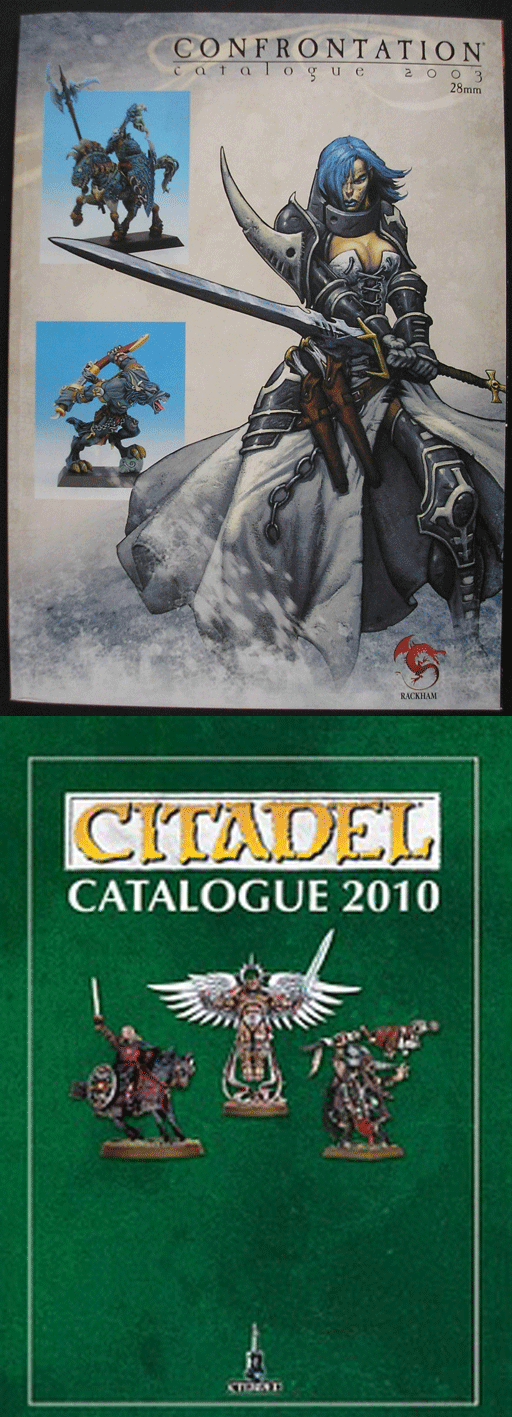
This one is a toss up depending on your tastes. Sadly Rackham are no more, so unless you have won the lottery their figures are out of reach of us mere (skint) mortals. So this is just meditation material. Gaze with amazement at the figures you’ll never be able to paint.
The GW catalogue is also another dreamers book. I would love to have pictures of the individual sprues next to the models. Sadly GW no longer do parts, just imagine the kit bashing opportunities?
 genuine grumpy old tin